published on 2026-05-15 · by Fábio
The history of fado — from Maria Severa to UNESCO
Two centuries of fado in a few minutes: where it was born, who Maria Severa was, the role of Amália Rodrigues, and how it became World Heritage.
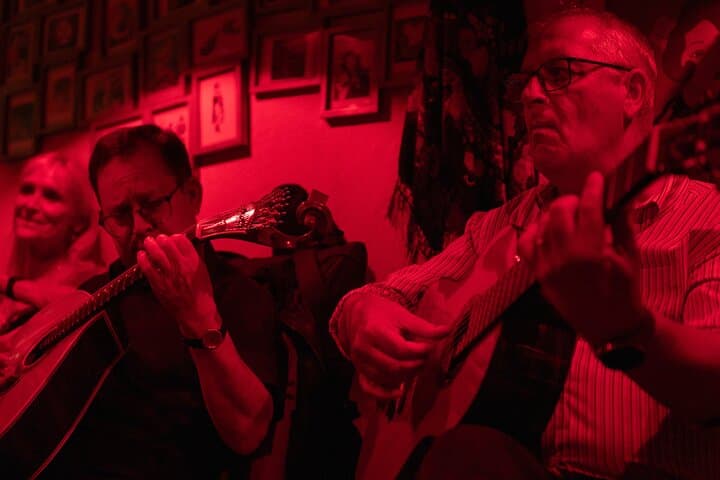
You don't need to know the history of fado to feel it. But knowing where it comes from changes the way you hear it — you realise that voice carries two centuries. Here's the short version.
The birth: early 19th century
Urban fado was born in Lisbon around 1820–1840, in the working-class neighbourhoods — Alfama, Mouraria, Madragoa. There's no birth certificate: it grew up in taverns, courtyards and eating houses, sung by ordinary people after work. The exact origins are lost — some point to the Brazilian lundum, sailors' songs, Moorish influences. Nobody knows for certain, and that's part of the mystery.
Maria Severa, the first fadista
The first figure remembered is Maria Severa Onofriana (1820–1846), a fadista from Mouraria, the daughter of a tavern keeper. Her relationship with a count of the time made her a legend — she lived briefly, dying at 26, but the name remained. Even today, when a fadista wears a black shawl, it's Severa being honoured.
Amália: fado goes global
Through the 20th century, Amália Rodrigues (1920–1999) transformed fado from neighbourhood music into internationally recognised art. The voice, the repertoire, the stage presence — Amália took fado to concert halls around the world and gave it a status it had never had. When she died in 1999, Portugal declared national mourning.
Fado and the Estado Novo
Here's the complicated part. During the Estado Novo dictatorship (1933–1974), the regime appropriated fado as a national symbol — the famous "fado, Fátima and football". Lyrics were censored and fadistas were licensed. Because of that, after the 1974 revolution, fado was for a time viewed with suspicion by a generation that associated it with the regime.
The rebirth and UNESCO
From the 1990s, a new generation — Mariza, Camané, and many others — returned prestige and audiences to fado. Houses opened, records were made, fado became a source of pride rather than embarrassment.
In 2011, UNESCO inscribed fado on the list of Intangible Cultural Heritage of Humanity. It was the official recognition of something Lisbon always knew: that this urban song is one of Portugal's most singular cultural contributions.
Hearing the history live
The best way to grasp the history is to be in a room where it continues. The Fado with tour and dinner includes a walk through Mouraria with the historical context before the show. The Alfama Experience does the same in more depth. And if you just want the music, Fado no Chiado gives you the classic repertoire in an hour. For the terms, there's a glossary.
- When was fado born?
Urban fado was born in Lisbon in the early 19th century, around 1820–1840, in the working-class neighbourhoods of Alfama, Mouraria and Madragoa.
- Who was Maria Severa?
Maria Severa Onofriana (1820–1846) is the first fadista of whom a memory remains. She sang in Mouraria and became a legendary figure of fado — the fadistas' black shawl is a tribute to her.
- Why is fado UNESCO Heritage?
In 2011, UNESCO inscribed fado on the list of Intangible Cultural Heritage of Humanity, recognising it as a unique cultural expression, passed down from generation to generation in Lisbon.
More guides
Ready to choose a night?
The experiences I recommend, with instant confirmation.
See the recommendationsSee also
The other experiences I recommend.
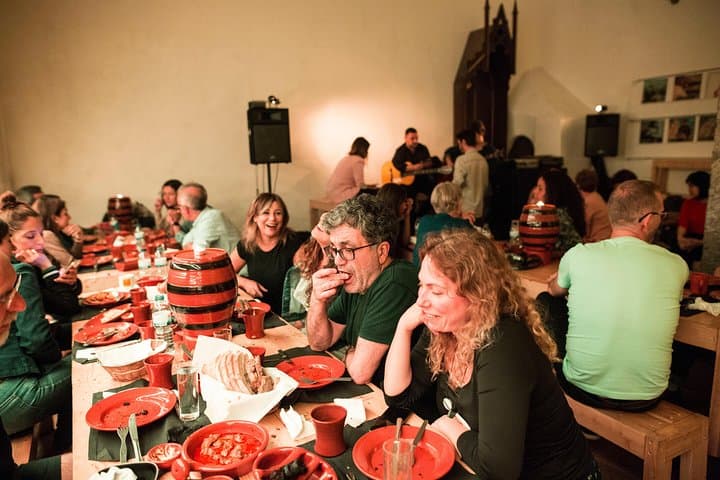
Fado with petiscos — a food tour in three stops
desde€94Three hours, three stops: a deli, a tavern and live fado. Ten petiscos, Portuguese wines and music — the night for those who eat with curiosity.
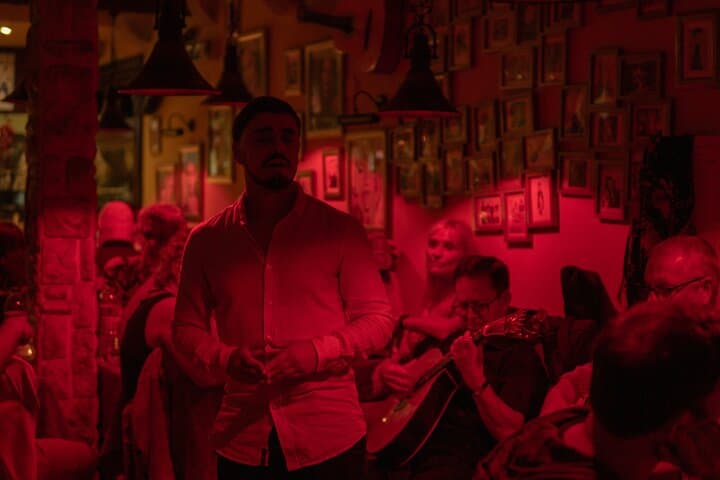
Fado with tour and dinner — a guided night through Mouraria and Alfama
desde€58Four hours: a walk through the streets where fado was born, dinner in a traditional house, and a live show. For those who arrive in Lisbon without context and want to leave with it.
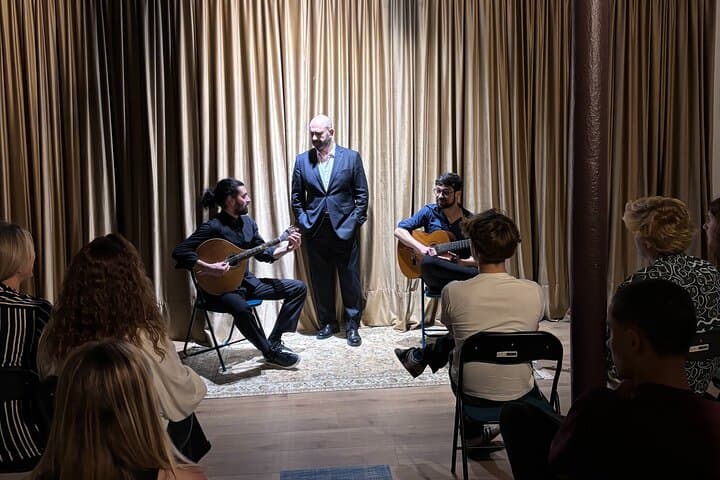
Fado in Alfama — a show in the neighbourhood, with port wine
desde€19An hour of fado in a small room, in the heart of Alfama. No dinner, with a glass of port. The most direct way to hear fado where it was born.