published on 2026-05-01 · by Fábio
What fado is — and how to experience it in Lisbon
Fado explained without the encyclopedia: what it is, where saudade comes from, how the Portuguese guitar works, and where to start.
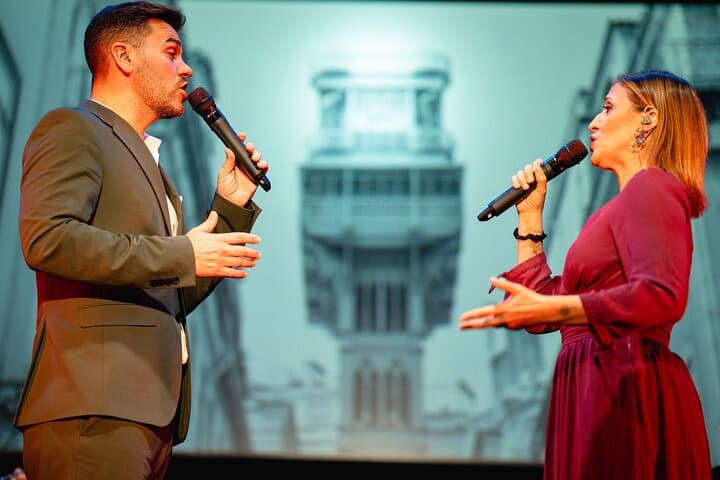
If you've never heard live fado, what you're about to read is a map — but the territory is something else. Fado is one of those things you grasp with the body before you grasp it with the head. First you feel, then you think. If it's the other way round, you're probably reading a Wikipedia article.
What it actually is
Fado is the urban song of Lisbon. It's not rural music, not folklore, not dance — it's a voice, a Portuguese guitar, a viola, and a silent room. It was born in the city's working-class neighbourhoods in the early 19th century — Alfama, Mouraria, Madragoa — and grew up in taverns, courtyards and eating houses where people sang after dinner.
Nobody knows exactly where it came from. Some say it has roots in the Brazilian lundum, others point to Moorish chants, others see the influence of sailors' songs. The truth is that no one knows for certain, and that's part of fado's character: it's something that exists and resists being explained all the way to the end.
What we do know is what happens when it's sung. A person standing, eyes often closed, singing with an intensity that has nothing to do with volume. It can be a whisper that raises the hair on your arms or a cry that stops the room. Around it, silence. Not a silence of politeness — a silence of necessity. Because fado demands it. And when the room gives it, something happens that has no equivalent in any other musical genre I know.
Saudade
You can't talk about fado without talking about saudade — and you can't talk about saudade without admitting the word has no exact translation. It's not nostalgia, though it resembles it. It's not sadness, though it can hurt. It's the presence of an absence. The sense of something that once was, or that never came to be, and that lives in you like a familiar weight.
Fado sings saudade, but not only. It sings jealousy, the street where you were born, concrete loves and impossible loves, Lisbon seen from the river and Lisbon seen from within. There are cheerful fados — few, but they exist. Comic fados. Fados that are neighbourhood chronicles. But the dominant tone is saudade, because it's the tone that works best in that format: a lone voice saying things that are normally said in silence.
You don't need to feel saudade to appreciate fado. You need to be available to listen to someone who feels it. That's the difference.
The Portuguese guitar
If the voice is the soul of fado, the Portuguese guitar is the nervous system. It's the instrument that gives fado the sound you recognise in three notes — that bright, trembling, metallic timbre that exists in no other music.
The Portuguese guitar is not a classical guitar by another name. It's a different instrument: twelve metal strings in six pairs, its own tuning, a completely different right-hand technique. It's played with fingernails or finger picks, and the result is a sound that swings between the crystalline and the piercing. It's the sound you hear before the voice comes in, and that continues after the voice stops.
In a fado house, the classic format is the trio: voice, Portuguese guitar and viola (classical guitar). The Portuguese guitar holds a dialogue with the voice — it answers it, anticipates it, underlines what the lyrics don't say. A good guitarist doesn't accompany the fadista; he converses with them. And there are moments when the guitar plays alone — the so-called "instrumentais" — and you realise the instrument speaks the same language as the voice, just without words.
How a fado night unfolds
If you've never been to a fado house, here's what to expect.
You arrive, sit down, order something — wine, water, dinner if the house serves it. The room fills up gradually. At some point, someone — the owner, someone from the room — introduces the first fadista. The room falls silent.
What follows is a block of three, four, five fados in a row — it depends on the house. Each fado lasts between two and five minutes. Between fados there's a brief pause: applause, a sip of wine, an exchange of glances. Then silence again, and the next fado.
On a typical evening, two to four different fadistas sing — each with their own style, repertoire, energy. Between the fado blocks there are longer intervals when you can talk, eat, go to the bathroom. The night alternates between those two modes: conversation and silence, meal and song.
The total length depends on the house. In houses with dinner, count on two to three hours. In houses without dinner, it can be shorter — an hour and a half is common.
Something nobody tells you: fado doesn't improve linearly through the night. Sometimes the best moment is the first fado. Sometimes it's the last, when the audience has surrendered and the fadista feels it. There's no planned narrative arc. It's more organic than that.
Where to start
If you want to hear fado in Lisbon for the first time, here are the three experiences I recommend — each for a different profile.
Fado no Chiado — The simplest way to hear fado. An hour of music in the city centre, no dinner, an intimate room. For those who want just the music and not to commit the whole night.
Fado with tour and dinner — The most complete night. A tour of Lisbon at the end of the day, dinner with traditional dishes and fado after, all in one programme. For those on a first visit who want to see the city and hear fado without splitting their nights.
Fado on a boat on the Tagus — The view you don't get anywhere else. A Tagus cruise with dinner on board and fado, Lisbon seen from the river at night. For those who want a night that doesn't repeat itself.
For those who prefer the freest format, fado vadio happens mostly in taverns of Bairro Alto and Mouraria, without reservation and without dinner — anyone can sing. Unpredictable and cheap, but when it works it's electric.
Each of these three experiences has a dedicated page on this site where I explain in detail what to expect, who it's for, and how to book. Start there — and if you have questions, write to me.
One last thing about fado
Fado is not entertainment. It can be, in the same way a painting can be decoration. But that's not what it exists for. It exists because there are things people need to say by singing — things that sound ridiculous in prose and find the right tone in music.
If you enter a fado house expecting a show, you'll get a show. If you enter expecting nothing — just with the willingness to listen — you might get one of those nights that shifts, a little, the way you are. I don't promise it. But it can happen. And when it does, you understand why this music has survived for two centuries in a city that changes every day.
More guides
Ready to choose a night?
The experiences I recommend, with instant confirmation.
See the recommendationsSee also
The other experiences I recommend.
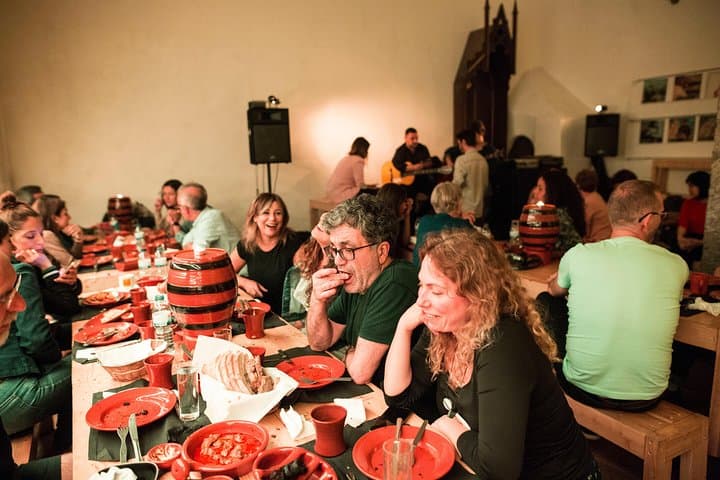
Fado with petiscos — a food tour in three stops
desde€94Three hours, three stops: a deli, a tavern and live fado. Ten petiscos, Portuguese wines and music — the night for those who eat with curiosity.
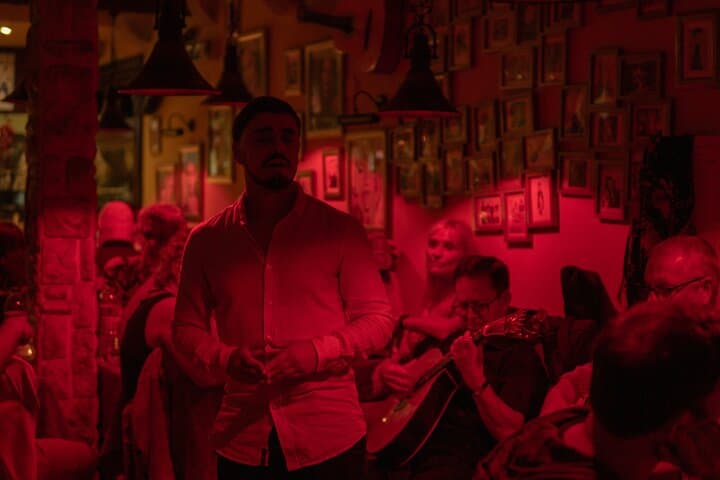
Fado with tour and dinner — a guided night through Mouraria and Alfama
desde€58Four hours: a walk through the streets where fado was born, dinner in a traditional house, and a live show. For those who arrive in Lisbon without context and want to leave with it.
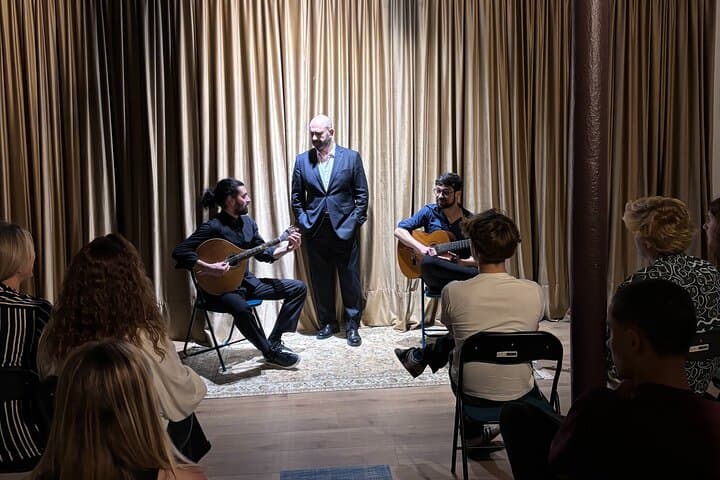
Fado in Alfama — a show in the neighbourhood, with port wine
desde€19An hour of fado in a small room, in the heart of Alfama. No dinner, with a glass of port. The most direct way to hear fado where it was born.