published on 2026-05-01 · by Fábio
Best fado in Alfama and Bairro Alto — seen from the inside
Two neighbourhoods, two worlds. What changes between hearing fado in Alfama and in Bairro Alto — and which one suits you better.
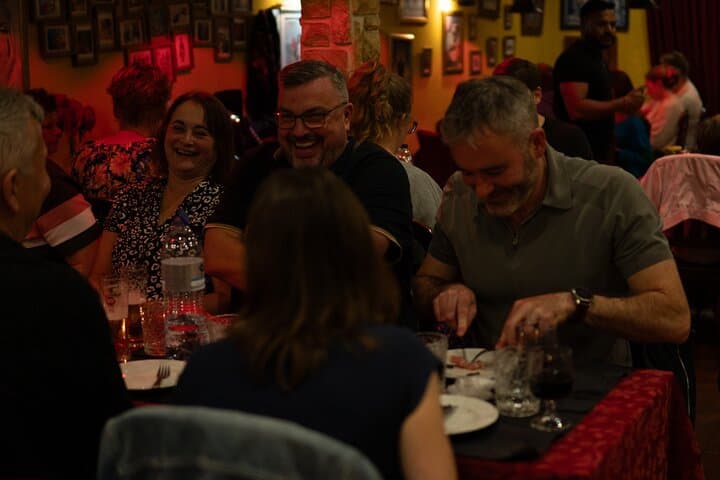
If you search "best fado Lisbon", you'll find two neighbourhoods repeated to exhaustion: Alfama and Bairro Alto. What nobody explains is that they're different worlds — in the kind of houses, in the audience, in the atmosphere of the street, and in what you'll feel when you step out the door.
I live in Alfama. I know the neighbourhood street by street, I know the musicians, I know the owners of the houses. I go to Bairro Alto less regularly, but enough to know what works there. I'll try to be fair to both.
Alfama: fado behind a closed door
Alfama is the historic neighbourhood of fado. The houses here tend to be more formal, with compulsory reservation, dinner included, and a clear structure to the night: you sit, you eat, the fado begins, and you stay until the end. The audience is older — not in age, but in attitude. People who came to listen, who know (or learn fast) that you don't talk during the singing.
What Alfama has best is the atmosphere outside the house. You leave a show at eleven at night and you're on a street of uneven cobblestones, with the light of the lamps on the walls, the Tagus down below, and the silence of a neighbourhood that goes to bed early. That transition — from the room to the street — is part of the experience. Don't underestimate it.
The experience I recommend to get to know Alfama with dinner is Fado with tour and dinner. It starts with a walk through the city at the end of the day, moves to a room in Alfama, and the fado comes after dinner — you eat traditional dishes and hear singing at the table. It's a programme built for visitors, yes, but honest in what it delivers and useful for those on a first visit to the city.
If you'd rather a session without dinner and closer to Chiado than to Alfama proper, Fado no Chiado is a shorter alternative — about an hour of music in an intimate room, no meal, no three hours at a table. It's not in Alfama, but it works for those who want to hear professional fado without committing the whole night.
Bairro Alto: fado with an open door
Bairro Alto is another thing. The neighbourhood is loud, full of people, full of bars — and in the middle of that, there are taverns with fado that run on a completely different energy from Alfama.
The main difference is fado vadio. While in Alfama fado is almost always professional — hired fadistas, prepared repertoire, defined structure — in Bairro Alto you find houses where anyone can stand up and sing. There's no programme, no guarantee. The night builds itself in real time. I don't recommend a specific tavern here because the rule of the neighbourhood is rotation — the best night is rarely the same from one Friday to the next. Ask in the neighbourhood, follow your ear.
Bairro Alto suits you better if you want a fado night embedded in a bigger evening out. You can have dinner at one of the area's many restaurants, drop into a tavern to catch a round of fado, and then continue the night at another bar. In Alfama, the fado night tends to be the whole night.
The alternative: the Tagus
There's a third option that belongs to neither neighbourhood: Fado on a boat on the Tagus. It's an experience built for visitors, with dinner and fado on board, and the setting is irreplaceable — Lisbon seen from the river at night. It doesn't replace a traditional fado house, but it's the most distinctive way to hear fado in Lisbon and worth it for a special occasion.
The honest comparison
I won't make a table with winners. But I can be clear about what each neighbourhood offers:
Alfama gives you consistency, formality, professional musicians, silence during the singing, and the context of the historic neighbourhood. The risk is low. The price is high. If you have one night and want to make sure you hear quality fado, Alfama is the rational choice.
Bairro Alto gives you spontaneity, energy, fado vadio, lower prices, and the possibility of fitting fado into a night with other plans. The risk is higher — you can have a memorable night or an uneven one. If you value adventure and accept the uncertainty, Bairro Alto rewards you.
What they don't tell you
Alfama has more tourist houses than Bairro Alto. This seems counter-intuitive — Alfama is "the fado neighbourhood", so it should be more authentic — but the truth is that the concentration of tourists in Alfama fed an industry of houses that do three sessions a night with fixed menus and little silence. Not every house in Alfama is good just for being in Alfama. The signs I describe in the article on authentic vs. tourist fado apply here with force.
Bairro Alto has another problem: the street. At eleven at night, the neighbourhood is noisy. If your plan is to leave a tavern and stroll in silence, forget it — you'll step out onto a street full of people with glasses in their hands. If that bothers you, Alfama is the better option for you.
My advice
If you have two nights, don't choose — go to both. One night in Alfama with dinner in a formal house, another night in Bairro Alto looking for fado vadio. They're such different experiences that they complement each other rather than compete.
If you only have one night, ask yourself the question: do I want control or do I want surprise? If the answer is control, Alfama. If it's surprise, Bairro Alto. Both are right answers.
More guides
Ready to choose a night?
The experiences I recommend, with instant confirmation.
See the recommendationsSee also
The other experiences I recommend.
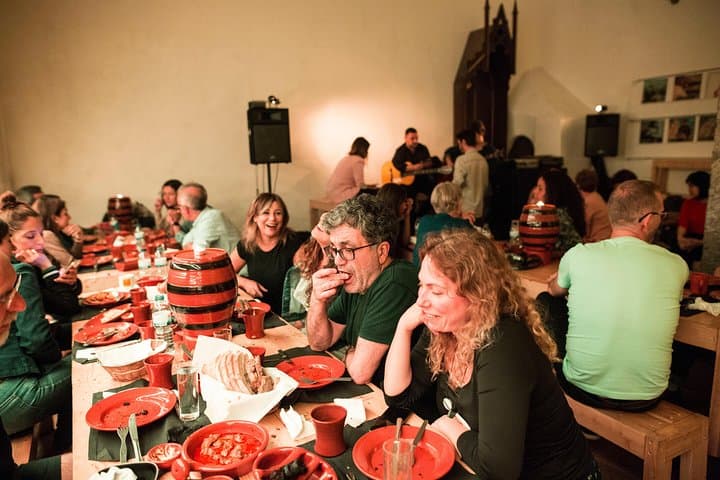
Fado with petiscos — a food tour in three stops
desde€94Three hours, three stops: a deli, a tavern and live fado. Ten petiscos, Portuguese wines and music — the night for those who eat with curiosity.
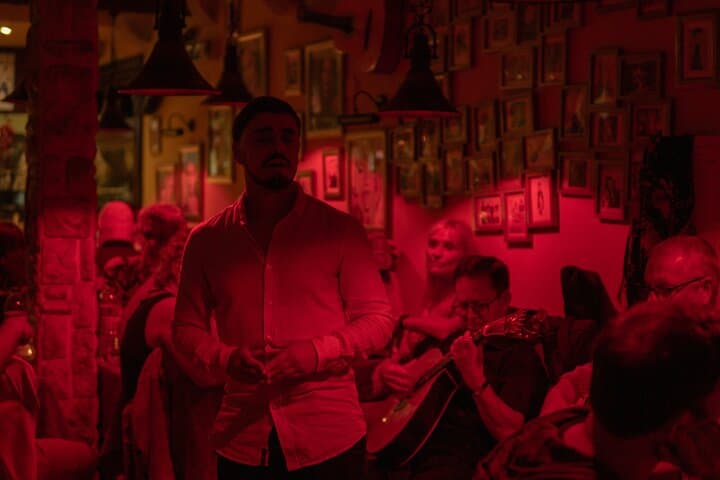
Fado with tour and dinner — a guided night through Mouraria and Alfama
desde€58Four hours: a walk through the streets where fado was born, dinner in a traditional house, and a live show. For those who arrive in Lisbon without context and want to leave with it.
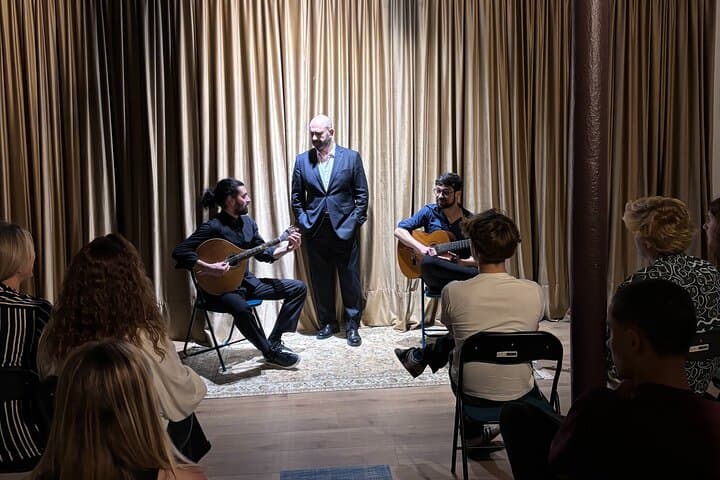
Fado in Alfama — a show in the neighbourhood, with port wine
desde€19An hour of fado in a small room, in the heart of Alfama. No dinner, with a glass of port. The most direct way to hear fado where it was born.