published on 2026-05-15 · by Fábio
Fado in Mouraria — a guide to the birthplace of fado
Mouraria is, by tradition, where urban fado was born. The neighbourhood of Maria Severa, today multicultural and less touristy. What to expect and how to discover it.
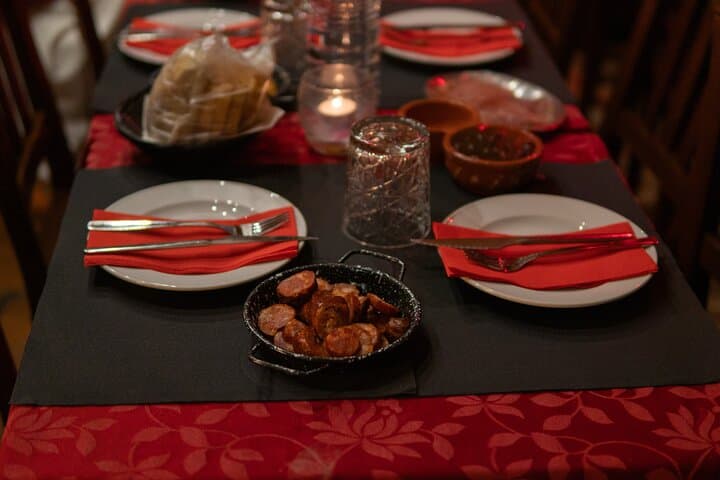
Everyone talks about Alfama. Almost nobody talks about Mouraria — and yet this is where tradition says fado began. If you want to understand fado properly, this neighbourhood is worth knowing.
The birthplace of fado
Mouraria sits between Martim Moniz and the Castle, leaning against Alfama. The name comes from the Moorish population confined here after the reconquest of Lisbon, in the 12th century.
It was in this neighbourhood that, by tradition, urban fado was born in the early 19th century — and it was here that Maria Severa Onofriana (1820–1846) lived, the first fadista of whom a memory remains. I tell that full story in the article on the history of fado.
Mouraria today
Unlike Alfama, Mouraria has largely escaped mass tourism. Today it's one of Lisbon's most multicultural neighbourhoods — shops, restaurants and people from dozens of origins, side by side with the fado tradition.
That makes it a more authentic neighbourhood in the sense of a living one — but it also means fado here is more hidden. There's no concentration of fado houses like Alfama's. To hear it in Mouraria, a guided programme is best.
The best way to discover fado in Mouraria
Fado with tour and dinner is the experience that best links Mouraria to fado. It starts precisely with a guided walk through Mouraria — the alleys where it all began, with the historical context — and continues to dinner and fado in Alfama. From €58, it's the natural bridge between the two neighbourhoods of fado's birthplace.
For an even deeper immersion in the neighbouring area, the Alfama Experience does five hours of cultural tour, dinner and fado.
How to get to Mouraria
Metro to Martim Moniz (green line) or Rossio (green line). From there, you walk up through the alleys. Fado with tour and dinner meets at Rossio station, right at the entrance to the neighbourhood.
- Where was fado born?
By tradition, urban fado was born in Mouraria, Lisbon, in the early 19th century. It was the neighbourhood of Maria Severa, the first fadista of whom a memory remains.
- Are there fado houses in Mouraria?
Fewer than in Alfama — Mouraria is today a multicultural neighbourhood with more discreet fado. The best way to hear it here is a guided programme, like Fado with tour and dinner, which starts with a walk through the neighbourhood.
- Who was Maria Severa?
Maria Severa Onofriana (1820–1846) was a fadista from Mouraria, the first figure of whom a memory remains in the history of fado. The fadistas' black shawl is a tribute to her.
More guides
Ready to choose a night?
The experiences I recommend, with instant confirmation.
See the recommendationsSee also
The other experiences I recommend.
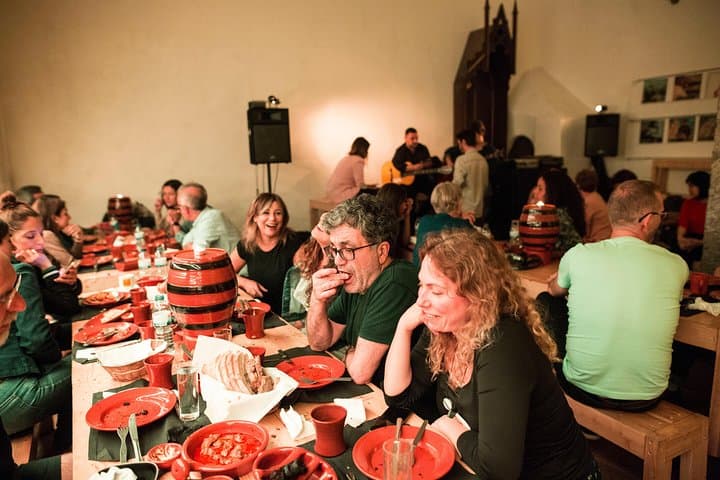
Fado with petiscos — a food tour in three stops
desde€94Three hours, three stops: a deli, a tavern and live fado. Ten petiscos, Portuguese wines and music — the night for those who eat with curiosity.
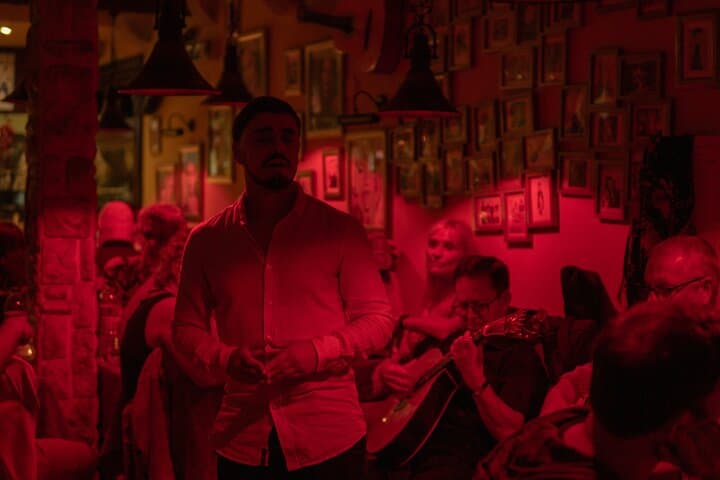
Fado with tour and dinner — a guided night through Mouraria and Alfama
desde€58Four hours: a walk through the streets where fado was born, dinner in a traditional house, and a live show. For those who arrive in Lisbon without context and want to leave with it.
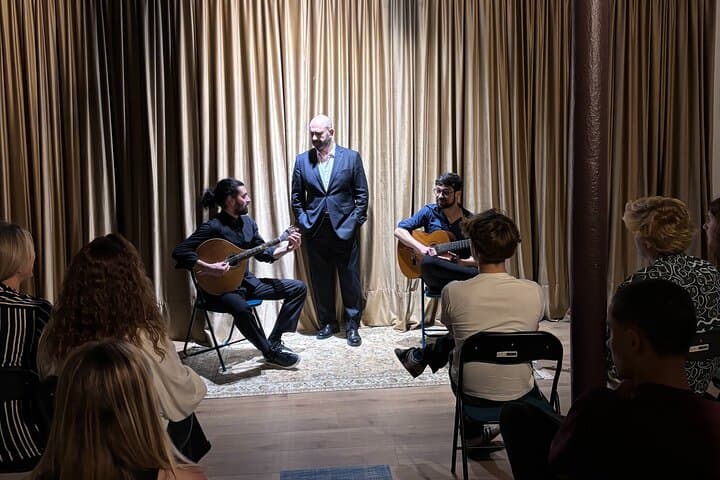
Fado in Alfama — a show in the neighbourhood, with port wine
desde€19An hour of fado in a small room, in the heart of Alfama. No dinner, with a glass of port. The most direct way to hear fado where it was born.