published on 2026-05-15 · by Fábio
Best time to see fado in Lisbon — season, day and hour
When to go to fado in Lisbon: the best season, the best day of the week, and the best hour of the night. And why August is the worst bet.
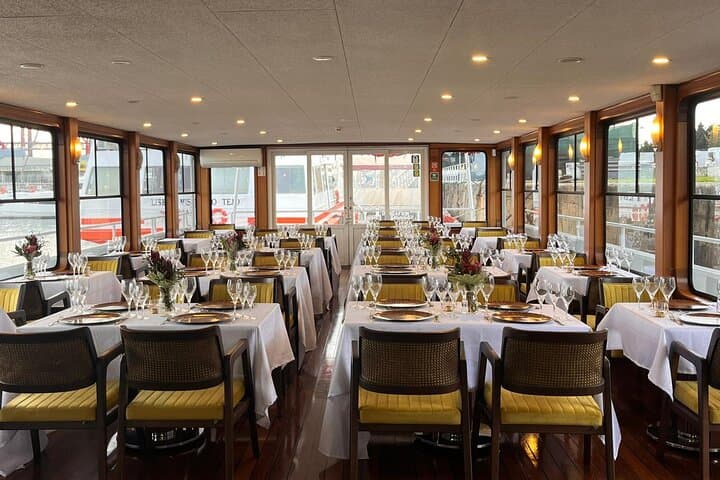
Unlike almost everything you do in Lisbon, fado doesn't depend on the weather. It happens indoors, in a closed room, at night. Rain or shine, the experience is the same. That shifts the question: it's not "when is the weather good", it's "when is the room at its best".
Best season
There's no bad season for fado itself — there are better seasons for you.
May, June, September, October are the sweet spot: the city is lively but not suffocating, the houses run at full tilt, and you book a few days ahead. It's my recommendation for a first visit.
July and August are the tourist peak. The houses are full, prices at their highest, and everything books with more lead time. Fado is still good — but the city around it is more tired. If you come in summer, book one to two weeks ahead.
November to April is the low season and, honestly, one of the best for fado. The rooms are calmer, the atmosphere more intimate, and there's more room for locals. The cold and the rain stay at the door — the room is warm.
Best day of the week
This is the tip that changes your night the most: go midweek.
Most houses run Tuesday to Saturday, some open on Monday. Friday and Saturday are the fullest nights and the hardest to book — and often the least intimate, with rooms overflowing.
A Wednesday or Thursday gives you the same house, the same musicians, but with a calmer room and less pressure. It's almost always the better experience for the same price. I cover the signs of a good house in the article on authentic vs. tourist fado.
Best hour of the night
Fado in Lisbon starts late. In houses with dinner, the meal begins around 8pm and the singing comes in between 9pm and 9.30pm. In short shows without dinner, expect a start around 7pm or 9pm, depending on the session.
If you have dinner included, arrive half an hour to an hour before the singing — it's part of the rhythm of the night. The practical guide has the rest of the logistics.
What if I only have one night?
If your schedule doesn't let you choose the day, no problem — fado is good on any night. For a safe choice regardless of date, a short show like Fado no Chiado or Fado in Alfama always works. For a full night with context, Fado with tour and dinner.
- What's the best time of year to see fado in Lisbon?
May, June, September and October are the sweet spot — lively city, houses at full tilt, easy to book. The low season (November–April) is more intimate. Avoid August if you can: tourist peak.
- What's the best day of the week?
Wednesday or Thursday. Same house and same musicians as the weekend, but with a calmer room and easier to book. Friday and Saturday fill up first.
- What time does fado start in Lisbon?
Typically between 9pm and 9.30pm in houses with dinner. If you have dinner included, arrive half an hour to an hour before. Some short shows have earlier sessions, around 7pm.
- Does the weather affect the fado experience?
No. Fado happens indoors, in a closed room. Rain or shine, the experience is the same — which makes it a great choice for a winter or rainy night.
More guides
Ready to choose a night?
The experiences I recommend, with instant confirmation.
See the recommendationsSee also
The other experiences I recommend.
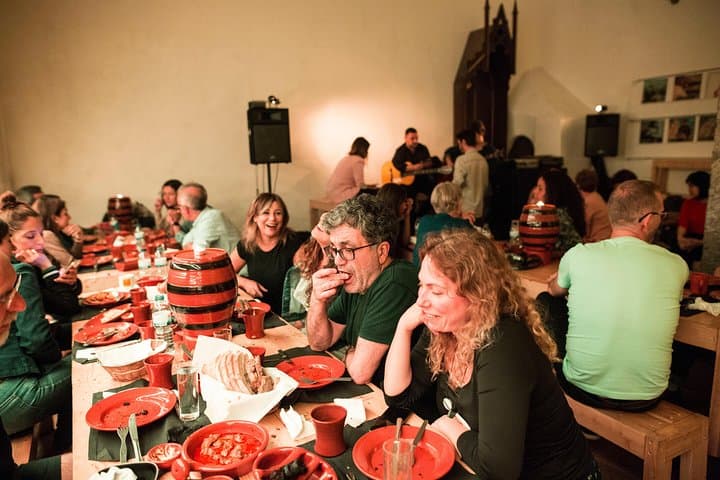
Fado with petiscos — a food tour in three stops
desde€94Three hours, three stops: a deli, a tavern and live fado. Ten petiscos, Portuguese wines and music — the night for those who eat with curiosity.
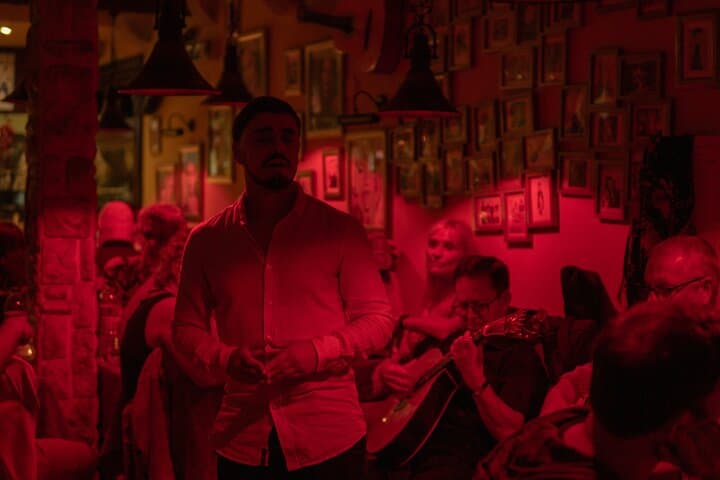
Fado with tour and dinner — a guided night through Mouraria and Alfama
desde€58Four hours: a walk through the streets where fado was born, dinner in a traditional house, and a live show. For those who arrive in Lisbon without context and want to leave with it.
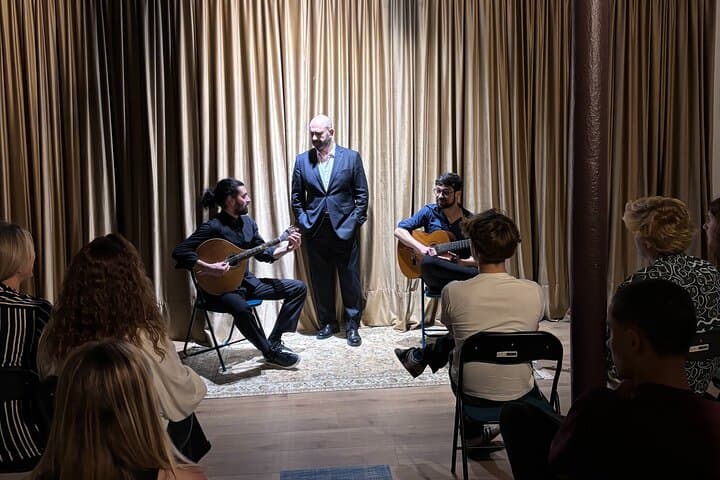
Fado in Alfama — a show in the neighbourhood, with port wine
desde€19An hour of fado in a small room, in the heart of Alfama. No dinner, with a glass of port. The most direct way to hear fado where it was born.